Blog

  • Should You Record Music in Pro Studio or Your Home Studio?

    homestudiovsprofessionalstudio

    We have all come across at a point where we ponder on the idea – “Should I just record on a pro Studio??.. Is it going to help me?? .. Hmmm!!”

    To tell you the truth there is no exact answer to this as it depends on various factors that you can take into account.

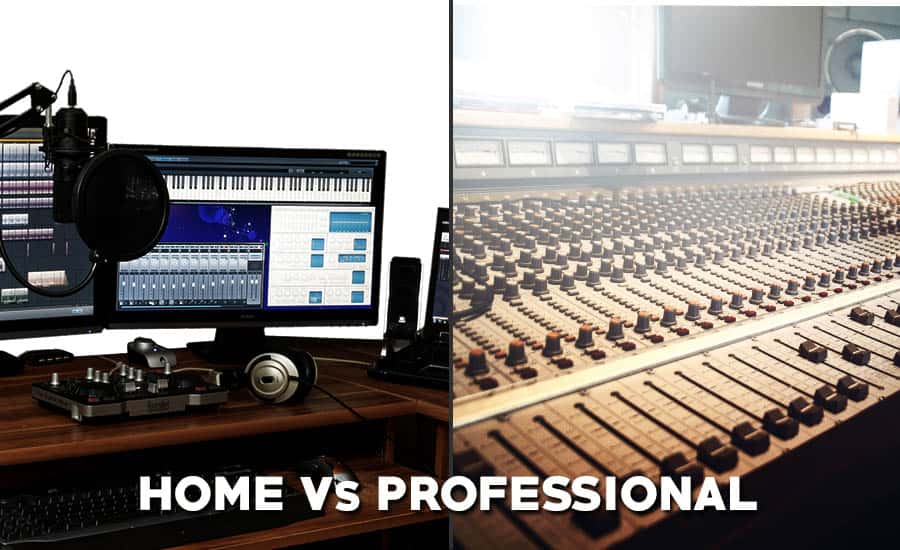
    There are many differences between home studio and professionalOpens in a new tab. studio. You need to take in or look into the factors before you choose between them.

    After you have consider all the factors (Coming to the factors latter), choose the one that will suit you the best for your current situation.

    Factors that You need Look Into

    1.Cost of Recording in a Professional Studio

    howmuchmoneyyouhave

    This is the most important thing that I could think of when you are choosing between the two. I think most of you who are reading this won’t have a big budget.

    If you had the extra cash, then you won’t be searching about this in the first place and probably would have gone to a professional studio.

    On the other hand, if you are looking for a better solution while having some cash with yourself .. then look into these things that I am talking about.
    pexels sean friday 4005730
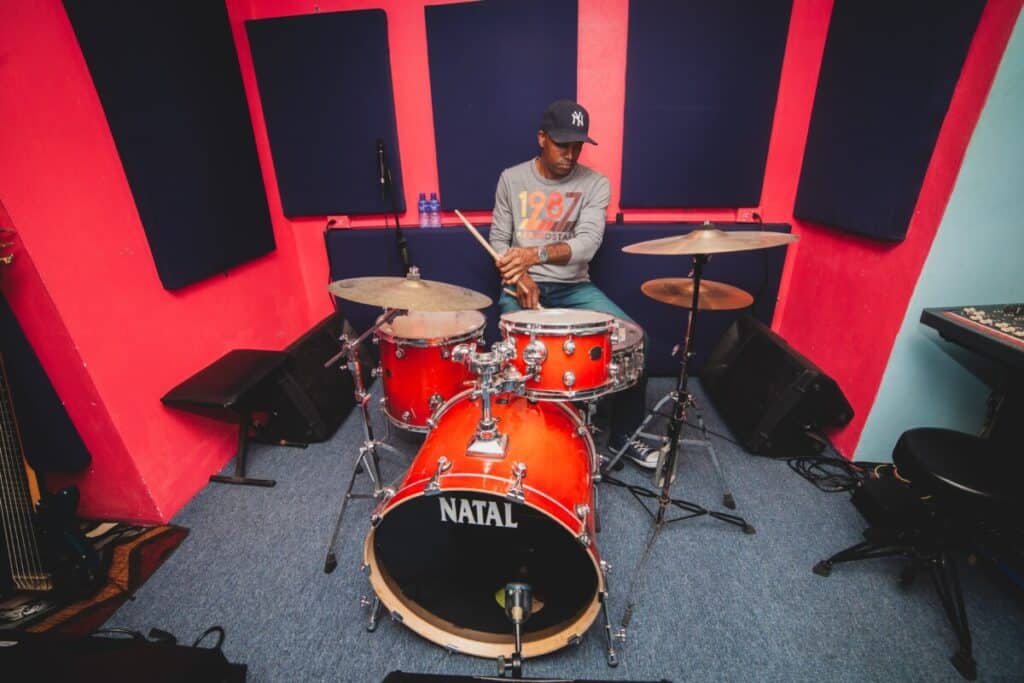
    Coming to the point – “How much does professional studio cost?”

    These  types of studios may charge you on an hourly rate – 50$ to 300$ or more on average/hr – this is not a fixed price, it can go more or less depending on the studio.

    There are other which charge per songs too – the price can range from 100$ to 500$/song. They can also charge based on projects too.

    For recording an entire album, it would come around a few thousand dollars minimum. It can go way up to 10k, 20k, 30k+ for a big professional studio.

    Now, you have got a simple idea on how much it would cost to record on a professional studio.

    2.What you need to record music at Home?

    Note : If you know about this, then you can just skip and go to the next part.

    There are several things that you need to record a song or a band at home. First of all, what type of song or music are you planning to make.

    The type of gears that you are going to need depends on the type of song you are going to make. Let’s look at some of the basic gears.

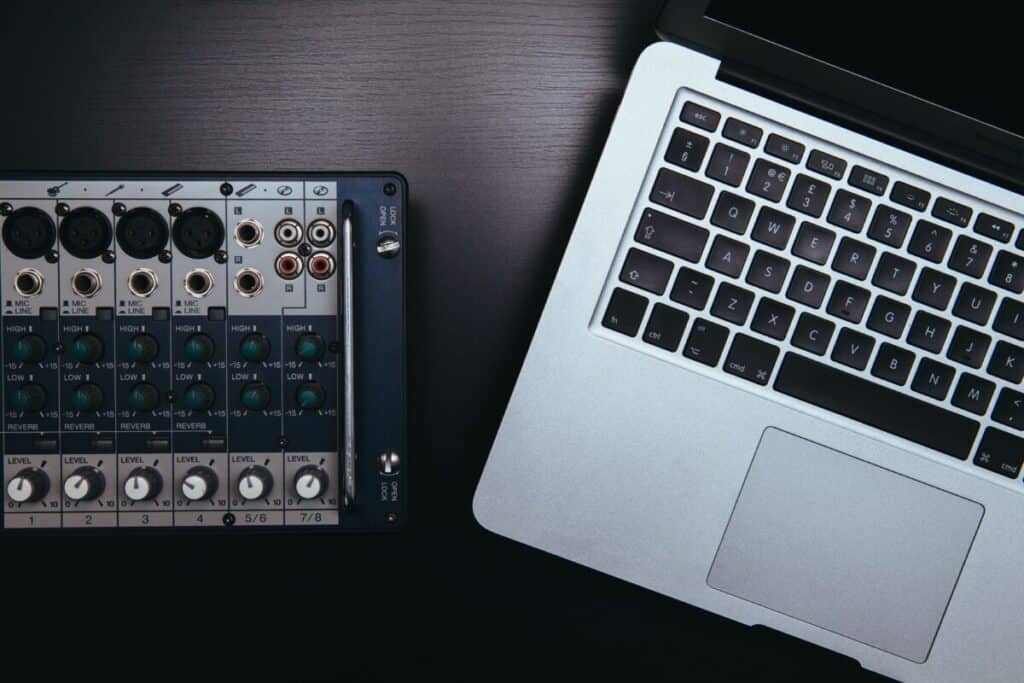
    You are for sure going to need a DAW Software (Digital Audio Workstation) where you can monitor, cut, edit the tracks easily.

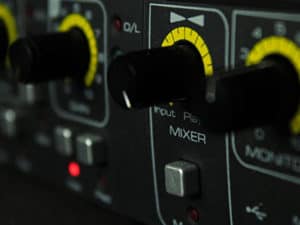
    After that, the next important piece is the Audio interface. In short, it is a device which will enable you to connect your gears with your PC.

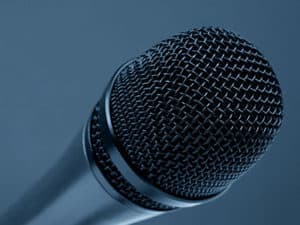
    It converts Analog signals to Digital Signals. Next, you need microphones to record the instruments and vocals.

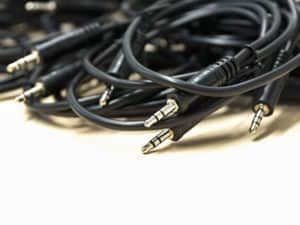
    You are going to need cables to connect the gears together too. These things are the most important ones for a recording studio at your home.

    There are other gears needed like guitars, amps, a pair of headphones, a pair of monitors, etc. and the list can go on. Most of latter gears can be added as per your requirement.

    Want to Setup your Home Recording Studio Under 400$ or Under 1000$! Then you can Learn More about Some of the Best Setups for different price ranges Opens in a new tab.we have prepared fro you!
    pexels little visuals 1784

    3.Recording effectively

    Do  you know how to record a song effectively? There are several factors that will affect your recordings which most of the people tend to leave out.

    recordingeffectively

    Let’s say you have all the recommended gears inside your home studio, but you don’t know how to position the gears inside your home recording studio.

    It will surely affect your records and the problem will show up in your record if you neglect these things.

    There are other factors like SoundproofingOpens in a new tab. and Acoustic TreatmentOpens in a new tab. which will bring out the ambience of your studio.

    If you are just starting out, you won’t know much about these things and it will be hard for you to take them in all at once.

    You won’t be able to do a perfect job even if you consider these things. There is a learning curve to it.

    This would seriously need some time period before you turn into a pro. Therefore, keep in mind that you need to look out several factors while recording in your home studio.

    And if you already have done this, then you can give a go with your home studio.

    Home Studio Vs Professional Studio

    Pros and Cons of a Home Studio

    Recording on a Home Studio is a lot of fun too. If you are not in a rush and can keep up during the time period of perfecting the art, then you should go with it.

    You will learn all the basic things needed to record a song as time goes and you can keep upgrading your studio too. In time, your studio will have grown to a full-fledged Studio.

    You will also become an expert on recording music, which you can use the skills you acquired to earn a couple thousands per month easily.

    The best thing is that you don’t need a big budget to start building your recording studio inside your room. You can record anything whenever you like it and you need not rush anything.

    On the other hand, the con is that you have no one such as an expert to monitor your records during and after the recording.

    Note : Even if you are not pro, you can still make your record or mix better. The article from Audioskills will help you do that.

    You need to master the recordings too if you want the best out of your recording and you won’t be able to do this yourself.

    It will take much longer time as compared to recording on a professional one.

    If you choose to record in a home studio, find out my tips on home recording basics.Opens in a new tab.

    Pros and Cons of a Professional Studio

    Let’s talk about recording on a professional one. A professional Studio will have a wide variety of gears and instruments. Your song or music will be the limit to this.

    You can record any type of genre with the different types of microphonesOpens in a new tab. meant for each genre. For the info, you need different mics to record different gears.

    They will also have those too. It will save you a lot of time because there will be professionals that are ready to help you throughout the recording.

    All the things you need will be pretty much there all you have to do is – Go inside and do your thing.

    However, there are cons to this too. You need to have a big budget as I have mentioned about the prices earlier.

    You need to manage your time efficiently, so that you won’t waste your money. You have to do it in a schedule. “Time is money” when you consider this path.

    Who are you Making For?

    The audience you are making the music for will play an important role here. Are you going to release it in public? Or Is it for your friends and family? – not for the general public.

    If you are going with the first part and you don’t know much about how the gear works, then you should go with the professional studio one.

    If you are with the latter part, then you can probably manage with your home studio. You can start building a new one right away and learn along the way.

    Remember, your budget is also one of the main factors you need to consider.

    Which is Better?

    There is no answer to this as you need to make a choice between the two based on your situations. Try considering the factors and come up with a decision that will suit you the best.

    If you like the article, be sure to check out other related articles.
    Was this article helpful?
    YesNo

  • How to Record a Band live in a Room?

    Record a band live

    We all know how to simply record the instruments and vocals with the gears we have. This is a common thing.

    And what we are looking for is to effectively record a band live in a room and in a systematic order to get the best out of your gears.

    There are some things that you need to take care of before we start recording. One thing is obviously the gears needed.

    Waitt!!! You might be thinking “Well, I have the gears!!”, but there might be some important piece of the puzzle that you have left out.

    Before we get to that part, I wanted to let you know that the article is going to be divided into three main parts. And so it is easier to understand and get to the points.

    As I have mentioned above we are going to it order and this is how I am going about –

    1. Gears that are needed and some brief descriptions on them.
    2. How we are going to record in an easy and systematic way.
    3. Some common FAQs

    Now, let’s get to the first part of the process

    What are the things needed to record a band live?

    I think you will know all the basic gears that are needed to start recording musicOpens in a new tab. inside your room or studio.

    Even so, some of the basic gears needed are Audio Interface, DAW (Digital Audio Workstations), Headphones, cables, microphones, keyboards, guitars, amps, pc or laptops, etc.

    It’s safe to say that you will probably have most of the gears that I have mentioned here as these are all the basic ones.

    We will go further into details about the above gears and other additional gears that I think you need to know before you start recording.

    Take care for these things with your Basic gears –

    Gears Needed

    1.Audio Interface: This is a simple gear and the most important thing that you need if you are recording using your pc or laptop or without it.

    Make sure you have all the adequate inputs and outputs for all of the gears that your band is going to use.

    If you are going to record a band live, then you need to have the minimum IP and OP on your interface. This is because you are going to record several instruments simultaneously.

    So, make sure your interface can handle all the inputs and outputs.

    You can check out our recommended interfacesOpens in a new tab.

    Note: On the other hand, you can record some instruments at a time and the other remaining at a second time if you don’t have the kind of interface. (though it would lead to complications)

    cablees

    2.Cables: Do your cable management correctly and make sure the right cables are connected to concerned inputs or outputs.

    What I would do is stick some sticky tapes with different colors on different wires so they don’t get mixed up. And I could sort them out easily too.

    You can buy Snake Cables too and it would certainly help your cables from getting messed up all around your room.

    microphones

    3.Microphones : You can’t use the same type of microphones to record all the different types of instruments for your band.

    There are different types of microphonesOpens in a new tab. for different purposes. For example – Large Diaphragm Condenser microphones are best for recording vocals as they are very sensitive.

    While Dynamic Microphones are used to record high-frequency audio from guitar amps, drum kits, etc.

    You are going to need dynamic mics to record from your amps too. So, you better check out the concerned microphones before you start anything.

    You can look up other related articles for more info on microphones and their uses.

    Our favourite Opens in a new tab.mOpens in a new tab.icrophonesOpens in a new tab. for a home recording studio

    Additional Gears

    1.DI boxes: It is used to convert unbalanced signals to balanced signals. DI boxes Opens in a new tab.will convert a high-level instrumental signal to a low-level signal which can be directly fed to a mixing console.

    It can split the outputs to one low level and the other at a high level. So, they are commonly used in live concerts and gigs. The best part is that it will remove the humming and buzzing effects.

    These effects are from the electromagnetic interference of the live wires of your gears.

    Therefore for a small piece of the box, it is quite helpful for recording live bands.

    2.Power Conditioners: You should use this so as to protect your gears from spikes and surges in the power supply. If you don’t this then, this will seriously damage your audio devices.

    It will also filter out the electromagnetic interference and radio frequency interference from the power source which could create unwanted noises in your records.

    3.Power Attenuators: This is an important thing if you are using amps and you are using a poorly treated room.

    As your electric guitars and all will annoy your neighbours and family members. This device will help you reach full tonal potential while keeping the volume lower.

    Riveria RockcrusherOpens in a new tab. is one of the most popular Power Attenuators.

    To the next part……

    How to record the band live?

    Before we get into it, if you don’t have all the gears and the right setup – you can just go to a professional studio and rent it for your project.

    1.Create a Scratch Track: You need to create this basic thing called the scratch track or guide, this will be the guide for all of your tracks.

    You can create this as tempos or drum loops which will act as the guide track for your band. This is where it all begins and make sure you put in the work on this part too.

    It’s alright even if the guide track is not that perfect, but try to make it a good one. Always good to have a better one.

    2.Positioning: Position all the band members with the right amount of distance from each other. Keeping them at a distance from each other is very important.

    This will ensure that the sounds from different instruments or amplifiers don’t get picked up by the microphones of other instruments.

    And the best position for your band members is to spread out all-around a particular point,  something like a semi-circle.

    You should also make sure that any of the amps are not directly facing each other.

    3.Start Recording: You can start recording now with the scratch guide you created before. Do some warm-ups together with all your bands.

    Build up that feeling and the vibe you want your music to vibrate, then do some takes with it. I would suggest you do some duplicates and some final takes.

    My preference is to take 2 duplicate takes and 3 final takes. (“Takes” mean records)

    These additional takes will surely help you while mixing and editing your records or mixes. Even if you do your best, there will always be some mistakes.

    And those mistakes will be filled up by those additional ones.

    Vocals Latter

    4.Vocals later: You should record your vocals later. This will be the best for your situation as you are recording your vocals inside your room.

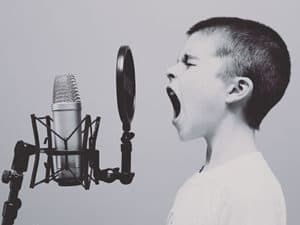
    The condenser mics are very sensitive and they will pick up all the sounds from other instruments very easily. And you need to avoid this at all costs.

    You can work with your vocals after you have finished recording all the instruments. Hearing a piece of well-tuned music while doing vocals will give an emotional boost to the vocalist.

    After all, music is about bringing out emotions. You could do as many takes as you like too.

    You can check my article on Recording a Song from Scratch if you like to know more in detail about this part.

    5.Monitor Your Live records: If you could – you should always have someone to monitor while your live recording session is going on.

    It is to ensure that there are no mistakes with the cable connections that could potentially ruin the take.

    It can be any distortions in the sounds, unbalanced signals, signal bleeds, etc. These types of errors can be prevented easily if someone is monitoring them.

    Can you record a band live in a small room?

    Well, to tell you the truth – I really can’t say the exact thing here. It’s because I don’t know how small of a room that you are talking about.

    If it’s too small or you don’t have enough space for the sound waves to reflect in a natural way, then you won’t be able to record a live band.

    All the reverberations from the walls of the room will get mixed up, creating standing waves and other disturbing sound waves.

    This will lead to various complications while recording.

    Where can you record the band live?

    When you don’t have a dedicated studio room – the most suitable and probable place where you can record is in your room or at the garage.

    If your room is big enough to compensate for the right amount of space for the band to record effectively (as I have mentioned above), then go for it.

    Let’s say you have enough space inside your room, then you should treat your room before you record inside it.

    Basically, treating has two steps – Sound Proofing and Acoustic Treatment.

    Wait!! Don’t sulk when I say something technical like this. It’s not that difficult to do and you don’t need to be a pro here.

    You can soundproof your roomOpens in a new tab. in an easy way and this is the first thing you should do. After that, the acoustic treatment processOpens in a new tab. should be done.

    When should you treat your room?

    The first thing you should ask yourself is that – for whom are you producing the music?? Are you going to release it in the public or is it only with your friends and family?

    If you are doing it for your friends and family, then you really don’t need to go that far with treating and all. You can do it if you want to produce high-quality tracks.

    Otherwise, this is a must. It will not only improve the quality of the music that you are producing, it will also save you a lot of time.

    So, the choice is yours.

    My last recommendation is to pick a room that you can do the treatment easily and where you can do upgrades later too.

    Was this article helpful?
    YesNo

  • Privacy Policy

    This page discloses our policies with the collection, use, and
    disclosure of Personal Information, if anyone decided to use our services.

    If you choose to use our services, then you agree to the collection and use of information in relation with this policy. The Personal Information that we collect are used for providing and improving the service. We will not use or share your information with anyone except as described in this Privacy
    Policy.

    The terms used in this Privacy Policy have the same meanings as in our Terms and Conditions, which is accessible at homestudioexpert.com/terms-and-conditions , unless otherwise defined in this Privacy Policy.

    What personal data we collect and why we collect it

    Comments

    When visitors leave comments on the site we collect the data shown in the comments form, and also the visitor’s IP address and browser user agent string to help spam detection.

    An anonymized string created from your email address (also called a hash) may be provided to the Gravatar service to see if you are using it. The Gravatar service privacy policy is available here: https://automattic.com/privacy/. After approval of your comment, your profile picture is visible to the public in the context of your comment.

    We do not collect your email address from the comments form for use in any email list, such as a newsletter or marketing email list.  We also never sell email addresses to third parties.

    Media

    In general, users are not able to upload images or other media files to this website.  However, if you do upload images to the website, you should avoid uploading images with embedded location data (EXIF GPS) included. Visitors to the website can download and extract any location data from images on the website.

    Contact forms

    When you fill out a contact form on Homestudioexpert.com, we only collect the information you enter into the contact form.  If the form asks for your name, email address, or any other personal information, then that information is sent to us via email.  We only retain that information—including your email address—for as long as necessary to address your purpose in contacting us.

    Email addresses provided in contact forms are not ever used for any purpose other than to reply to you in regards to your reason for contacting us.  We never sell information from contact forms to any third parties for any purpose.

    Cookies

    If you leave a comment on our site you may opt-in to saving your name, email address and website in cookies. These are for your convenience so that you do not have to fill in your details again when you leave another comment. These cookies will last for one year.

    Embedded content from other websites

    Articles on this site may include embedded content (e.g. videos, images, articles, etc.). Embedded content from other websites behaves in the exact same way as if the visitor has visited the other website.

    These websites may collect data about you, use cookies, embed additional third-party tracking, and monitor your interaction with that embedded content.

    Analytics

    As you use this Website, we use automatic data collection technology (Google Analytics) to collect certain information about your device, browsing actions, and patterns. This generally includes information about where you are, how you use our website, and any communications between your computer and this site. Among other things, we will collect data about the type of computer you use, your Internet connection, your IP address, your operating system, and your browser type.

    We collect this data for statistical purposes and we don’t collect personal information. The purpose of this data is to improve our Website and offerings.

    If you wish to opt out of Google Analytics so that none of your personal information is collected and stored by Google Analytics, you can download and install the Google Analytics Opt-out Browser Add-on here.  For more information on how Google collects and uses your data, you can access the Google Privacy Policy here.

    Who we share your data with

    We don’t sell or share your data with anyone.  We do use a 3rd party email provider to store your email address if you voluntarily signed up for our email newsletter.

    How long we retain your data

    If you leave a comment, the comment and its metadata are retained indefinitely. This is so we can recognize and approve any follow-up comments automatically instead of holding them in a moderation queue.

    All users can see, edit, or delete the data we have on this.

    What rights you have over your data

    If you have left comments on this website you can request to receive an exported file of the personal data we hold about you, including any data you have provided to us. You can also request that we erase any personal data we hold about you. This does not include any data we are obliged to keep for administrative, legal, or security purposes.

    Where we send your data

    Visitor comments may be checked through an automated spam detection service.

    Our contact information

    For questions regarding your data and how we use it, you can reach us at . You can also email us here if you would like an extract of all of your personal information stored on our website or to request that we delete all of your information stored on our website.

    Mediavine Programmatic Advertising (Ver 1.1)

    The Website works with Mediavine to manage third-party interest-based advertising appearing on the Website. Mediavine serves content and advertisements when you visit the Website, which may use first and third-party cookies. A cookie is a small text file which is sent to your computer or mobile device (referred to in this policy as a “device”) by the web server so that a website can remember some information about your browsing activity on the Website.

    First party cookies are created by the website that you are visiting. A third-party cookie is frequently used in behavioral advertising and analytics and is created by a domain other than the website you are visiting. Third-party cookies, tags, pixels, beacons and other similar technologies (collectively, “Tags”) may be placed on the Website to monitor interaction with advertising content and to target and optimize advertising. Each internet browser has functionality so that you can block both first and third-party cookies and clear your browser’s cache. The “help” feature of the menu bar on most browsers will tell you how to stop accepting new cookies, how to receive notification of new cookies, how to disable existing cookies and how to clear your browser’s cache. For more information about cookies and how to disable them, you can consult the information at All About Cookies.

    Without cookies you may not be able to take full advantage of the Website content and features. Please note that rejecting cookies does not mean that you will no longer see ads when you visit our Site. In the event you opt-out, you will still see non-personalized advertisements on the Website.

    The Website collects the following data using a cookie when serving personalized ads:

    • IP Address
    • Operating System type
    • Operating System version
    • Device Type
    • Language of the website
    • Web browser type
    • Email (in hashed form)

    Mediavine Partners (companies listed below with whom Mediavine shares data) may also use this data to link to other end user information the partner has independently collected to deliver targeted advertisements. Mediavine Partners may also separately collect data about end users from other sources, such as advertising IDs or pixels, and link that data to data collected from Mediavine publishers in order to provide interest-based advertising across your online experience, including devices, browsers and apps. This data includes usage data, cookie information, device information, information about interactions between users and advertisements and websites, geolocation data, traffic data, and information about a visitor’s referral source to a particular website. Mediavine Partners may also create unique IDs to create audience segments, which are used to provide targeted advertising.

    If you would like more information about this practice and to know your choices to opt-in or opt-out of this data collection, please visit National Advertising Initiative opt out page. You may also visit Digital Advertising Alliance website and Network Advertising Initiative website to learn more information about interest-based advertising. You may download the AppChoices app at Digital Advertising Alliance’s AppChoices app to opt out in connection with mobile apps, or use the platform controls on your mobile device to opt out.

    For specific information about Mediavine Partners, the data each collects and their data collection and privacy policies, please visit Mediavine Partners.

  • Recommended Setups

    [cs_content][cs_element_section _id=”1″][cs_element_row _id=”2″][cs_element_column _id=”3″][cs_element_image _id=”4″][/cs_element_column][/cs_element_row][/cs_element_section][cs_element_section _id=”10″][cs_element_row _id=”11″][cs_element_column _id=”12″][cs_element_headline _id=”13″][/cs_element_column][/cs_element_row][/cs_element_section][cs_element_section _id=”19″][cs_element_row _id=”20″][cs_element_column _id=”21″][cs_element_image _id=”22″][cs_element_button _id=”23″][/cs_element_column][cs_element_column _id=”24″][cs_element_image _id=”25″][cs_element_button _id=”26″][/cs_element_column][cs_element_column _id=”27″][cs_element_image _id=”28″][cs_element_button _id=”29″][/cs_element_column][/cs_element_row][/cs_element_section][/cs_content]

  • Mic Placement for Acoustic Guitar

    In this post we will discuss mic placement for acoustic guitar.


  • Welcome to Home Studio Expert

    I would like to welcome you to Home Studio Expert.

    I hope you will enjoy your stay and come back often.